
Nepal Meets World / The city guide
Kathmandu Travel Guide: History, Culture & Things to Do
Prayer wheels turn beside busy streets. Carved windows overlook courtyards where neighbours gather. Kathmandu rewards travellers who make time for its living culture, as well as its remarkable monuments.
Spend two or three full days exploring Nepal’s capital: walk the old city, visit its sacred sites, taste Newar food and leave room for the unexpected.
01 / Kathmandu guide
Kathmandu at a Glance
Kathmandu is Nepal’s capital, in the Kathmandu Valley. This guide covers the city and its principal urban heritage sites. Patan (Lalitpur) and Bhaktapur are distinct cities in the Valley, with their own palace squares and traditions. Allow separate days for them.
Make time
Two days cover the old city and eastern sacred sites. Three full days let you add Swayambhu, a museum and slower neighbourhood exploring. Arrival and departure days are extra.
Arrive
Tribhuvan International Airport is Kathmandu’s main air gateway. Arrange your first transfer in advance or use an authorised airport transport service.
Choose a base
Thamel for convenience and evening choices; Boudha for the stupa neighbourhood; the historic core for old-city walks.
Time your visit
March–April and October–November usually suit outdoor sightseeing. Winter requires warm layers; monsoon visits need flexible plans.
Know the essentials
Currency: Nepalese rupee (NPR). Nepali is widely spoken; Nepal Bhasa is central to Newar heritage. English is common in visitor services but cannot be assumed everywhere.
Start here
Durbar Square, Swayambhunath, Boudhanath and Pashupatinath, balanced with Asan’s markets, local food and neighbourhood courtyards.
For the wider journey, see our Nepal overview and practical Nepal travel guide.
02 / Kathmandu guide
The History of Kathmandu
A city shaped by many histories
Kathmandu’s past reaches beyond its surviving palace buildings. Early settlement stories, inscriptions, religious traditions and later royal chronicles offer different kinds of evidence. The well-known story of Manjushri opening a lake to create the Valley belongs to sacred tradition; it should not be presented as a documented account of the city’s foundation.
Licchavi-period inscriptions and monuments in the wider Valley record an established society of rulers, religious patrons and settlements. Their legacy provides important context for Kathmandu, even when a particular monument, such as Changu Narayan, lies outside the city.
Malla Kathmandu and the palace square
Under the Malla rulers, Kathmandu, also known as Kantipur, developed as a royal and commercial centre. The Valley eventually contained competing kingdoms, and royal patronage supported palaces, temples and elaborate public ceremonies. Hanuman Dhoka and the surrounding Durbar Square still show how political authority and religious life shared the same urban space.
The historic city was also made by merchants, craftspeople and neighbourhood communities. Newar trading networks connected the Valley with Tibet and the plains to the south. Wealth, artistic knowledge and religious ideas moved along these routes. Look beyond the largest temples to carved domestic windows, rest houses and courtyard entrances.

From royal capital to modern metropolis
Prithvi Narayan Shah’s conquest of Kathmandu in 1768 brought the city into the expanding Gorkha kingdom. Kathmandu became the capital of unified Nepal. Later Rana rule introduced another layer of palace architecture and concentrated political power, while the twentieth century brought major changes in government, access and urban growth.
Today’s city includes contemporary homes, businesses, universities and roads alongside older settlements. Nepal became a republic in 2008. Describing Kathmandu solely as an untouched medieval city misses both its political history and the lives of its present-day residents.
- Early settlements and the Licchavi periodReligious traditions and inscriptional evidence illuminate the Valley’s early history, with surviving fifth-century evidence in the wider Valley.
- Malla period, roughly the 12th to 18th centuriesRoyal courts, merchant networks and Newar craftsmanship shape the city and its ceremonial spaces.
- 1768 and the Shah periodKathmandu is incorporated into the expanding kingdom and becomes the national capital.
- 19th and 20th centuriesRana palaces, political transitions and growing urban connections add new layers to the city.
- 2008Nepal becomes a republic.
- 2015 onwardsThe earthquake damages monuments and neighbourhoods. Restoration continues alongside the work of maintaining living heritage.
Restoration is part of the story
The 2015 earthquake caused serious loss across the Valley. Rebuilding is not simply a matter of replacing a roof: materials, craft skills, archaeological evidence and community use all matter. UNESCO has reported significant restoration progress, while continuing to stress conservation and management needs. Expect individual buildings or courtyards to have changing access arrangements.
Historical context: Nepal Tourism Board’s history overview, Kathmandu Valley background and UNESCO’s conservation assessment.
03 / Kathmandu guide
Kathmandu’s Living Culture and Traditions
Kathmandu’s heritage is sustained through worship, neighbourhood responsibilities, skilled work and family life. Newar communities are central to this history, while the contemporary city is home to people from many parts of Nepal and beyond.

Read the architecture slowly
Timber struts, latticed windows, brickwork and carved doorways reward close attention. A bahal or bahi is associated with Newar Buddhist monastic life, but a courtyard can also be a route to someone’s home or a place of everyday work. An open doorway does not automatically mean public access.
Hindu and Buddhist traditions
Sacred spaces and devotional practices often intersect in the Valley, while retaining distinct meanings and communities. At Jana Bahal, Seto Machhindranath is revered by Hindu and Buddhist worshippers. Elsewhere, shrines, stupas and monasteries sustain their own daily rhythms. Follow local practice rather than assuming the same rules apply everywhere.
The Kumari tradition
Kathmandu’s Kumari is revered as a living goddess and resides at Kumari Ghar. Treat the institution with the respect due to a religious tradition and the privacy due to a child. An appearance is not a guaranteed visitor attraction. Follow staff instructions, and do not photograph the Kumari where prohibited.
Guthi and community responsibility
Guthi institutions help sustain religious, social and cultural duties, including festivals and the care of heritage. Their forms and responsibilities vary. A procession represents community organisation, resources and inherited obligations, not just a spectacle on the street.
Music, dance and craftsmanship
Festival music and masked dances belong to specific traditions. Give performers and musicians space, and ask before making close portraits. For craft purchases, seek information about the maker, material and process rather than relying on an unsupported claim that an object is antique.
A respectful way to explore
Pause at the edge of a ritual, keep doorways clear and ask before entering a courtyard or workshop. A knowledgeable local guide can explain details that are easy to miss, but permission remains with the people responsible for each space.
Further context: Nepal Tourism Board’s old-city heritage walk and research on the guthi system and heritage conservation.
04 / Kathmandu guide
Festivals and Jatras in Kathmandu
Jatras are community festivals and processions that bring Kathmandu’s sacred geography into its streets. Routes, rituals and responsibilities connect particular neighbourhoods. The eight celebrations below offer different perspectives on the city, from chariot processions to family observances.

Usually August–September
Indra Jatra (Yenya)
One of Kathmandu’s defining celebrations, Yenya honours Indra and brings several traditions together around Basantapur and the old city. The festival includes the raising of a ceremonial pole, masked dances and chariot processions associated with the Kumari, Ganesh and Bhairav.
The music, lamps and movement through neighbourhoods carry religious and community meaning. Watch from a safe position identified by organisers. Keep clear of chariot ropes and wheels, and never climb on shrines for a better photograph.
Usually March–April
Seto Machhindranath Jatra
Jana Baha Dyah, also called Seto Machhindranath, is revered by Hindu and Buddhist devotees. The chariot procession moves through old Kathmandu, linking areas including Jamal, Asan, Hanuman Dhoka and Lagan. Worshippers seek blessings associated with rain, prosperity and wellbeing.
The tall chariot’s passage depends on collective effort through narrow streets. Leave working space for the people pulling and managing it. Check the day’s route locally instead of assuming that the procession will reach a particular square at a fixed hour.
Usually March–April
Ghode Jatra
Ghode Jatra is associated with equestrian displays at Tundikhel and the story of Gurumapa. It takes place amid a wider period of Newar neighbourhood observances, including Pahan Charhe. The public military event and local religious traditions are related parts of the calendar, but should not be treated as the same ceremony.
Do not assume admission to the official grounds is open to everyone. Confirm viewing arrangements and respect security barriers. Neighbourhood activities may be more intimate; ask before photographing worshippers or entering ritual areas.
Usually September–October, around Dashain
Pachali Bhairav Jatra
Centred on the Pachali Bhairav shrine near Teku and connected old-city neighbourhoods, this celebration honours Bhairav through rituals, music and processions maintained by local communities and guthi members. Sacred objects and ceremonial vessels are handled according to inherited responsibilities.
Annual observances and longer-cycle traditions are not interchangeable. Ask local organisers which ceremonies are taking place that year. Observe from the edge, make room for participants and avoid touching ritual objects or following a procession into a restricted space.
Usually February–March
Maha Shivaratri
The night dedicated to Shiva draws large numbers of pilgrims to Pashupatinath. Worship, vigils and the gathering of devotees and sadhus make this one of the sacred complex’s most important occasions. Expect crowd management and altered movement around the area.
Choose a modest sightseeing plan and allow substantial extra time. Non-Hindu visitors remain subject to temple-entry restrictions. Photograph people only with permission, and never let a camera interrupt worship or a family’s funeral rites.
Usually August–September
Teej
Haritalika Teej brings women together for visiting family, feasting, songs, dancing and devotional observances. Pashupatinath is an important gathering place. Red clothing is especially visible, but practices and individual participation vary.
For many participants the festival combines faith, kinship and shared expression. Watch without obstructing queues, and seek permission before portraits. Join a gathering only when invited; do not assume that public celebration makes every participant available for photography.
Usually September–October
Dashain
Dashain honours Durga and is a major period of family reunion. Temple visits, jamara and tika blessings are important elements, although observance differs between households and communities. Much of the celebration takes place in homes.
Kathmandu can feel different as residents travel to family elsewhere. Confirm museum, shop and transport arrangements, and avoid scheduling essential errands around assumed normal opening hours. A family invitation is a privilege; follow your host’s guidance about participation and photographs.
Usually October–November
Tihar
Lamps, flowers and decorated doorways mark Tihar. Its observances honour relationships with animals, worship Laxmi and celebrate sibling bonds through Bhai Tika. Newar communities also observe Mha Puja, with its own meaning and household rituals.
Neighbourhoods may host Deusi and Bhailo singing. Enjoy illuminated streets without stepping across offerings, mandalas or lamps. Private rituals are not open-house attractions: ask before entering, and photograph household decorations without intruding on the people inside.


Keep the geography clear: Bisket Jatra’s principal celebrations belong to Bhaktapur. Rato Machhindranath Jatra is primarily associated with Lalitpur. Neither is presented here as a Kathmandu-city festival. Festival photographs show documented past celebrations, not a promise of a particular performance or viewing arrangement.
05 / Kathmandu guide
Best Things to Do in Kathmandu
For a first visit, combine one heritage area with time to absorb its surroundings. The sightseeing durations below are planning estimates, excluding road transfers, meals and queues. Worship, restoration work and special events can affect access.
Kathmandu Durbar Square and Hanuman Dhoka
The former royal centre brings together palace courtyards, temples and public spaces. Look for the relationship between the palace, ceremonial platforms and the streets that feed into the square. A guide can help distinguish different construction periods and restored structures.
Allow 1½–2½ hours. Ask at the ticket counter which palace and museum spaces are open that day. Uneven paving, thresholds and steps make access variable. Keep your ticket and check re-entry conditions before leaving the paid area.
Swayambhunath Stupa
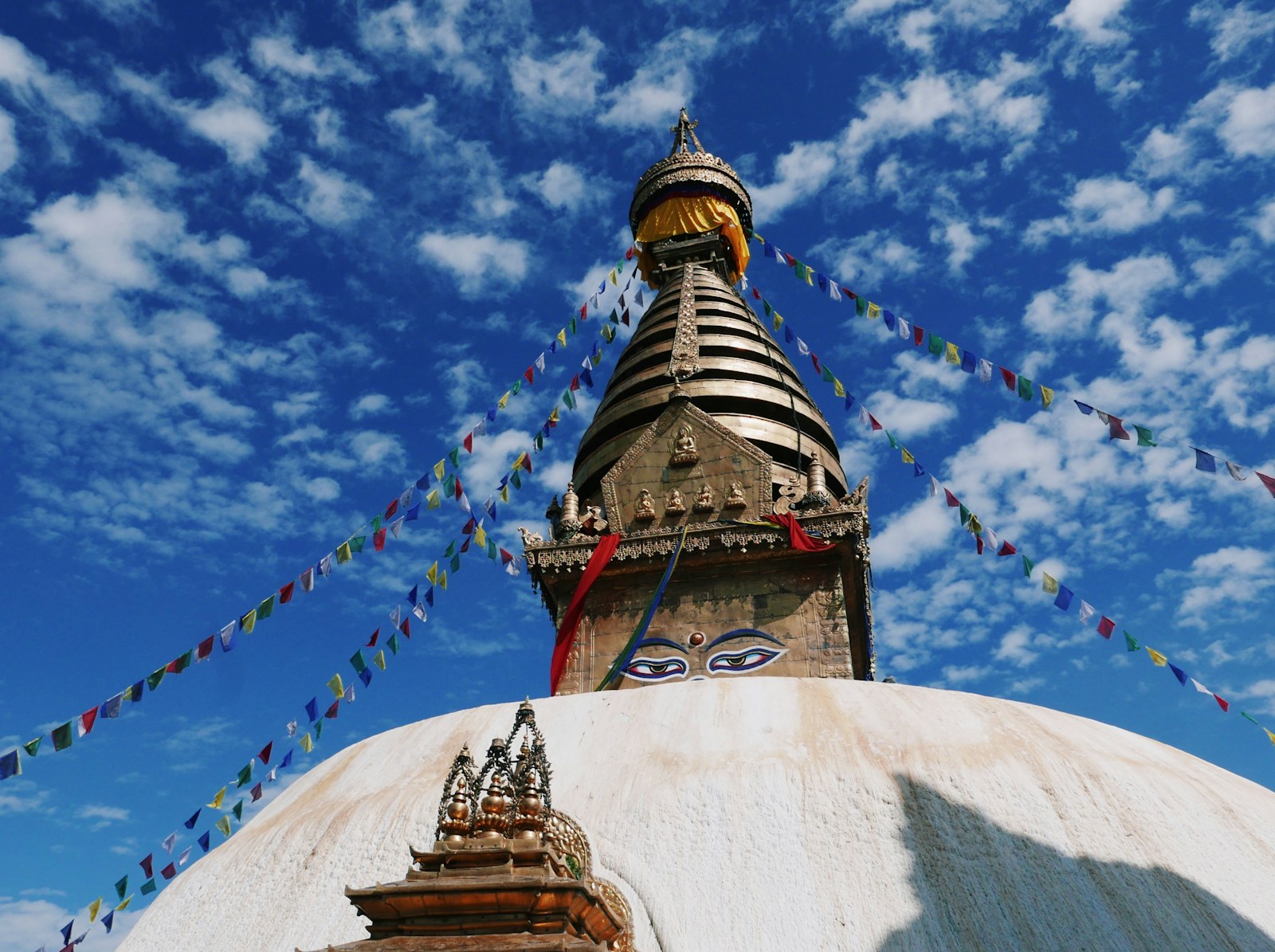
Swayambhu’s hilltop setting combines a major Buddhist stupa with shrines and views across Kathmandu. Prayer wheels and the movement of worshippers help explain why the site is a living pilgrimage place. Follow the customary clockwise circuit where indicated.
Allow 1–2 hours. The eastern staircase is steep. A road approach towards the upper area reduces the climb but does not guarantee step-free access throughout. Keep food secure and do not feed or approach the monkeys.

Boudhanath Stupa
The great white stupa anchors a neighbourhood of monasteries, shops and places to pause. Walk the prayer circuit respectfully, keeping pace with worshippers rather than blocking the route for photographs. A quieter visit gives you time to notice the prayer wheels and surrounding devotional life.
Allow 1½–2 hours. The surrounding circuit is comparatively level, but individual entrances and terraces may have steps. Ask permission before entering a monastery or photographing inside.

Pashupatinath Temple
This sacred complex on the Bagmati is one of Nepal’s most important Hindu pilgrimage places. Its significance includes worship, life-cycle rituals and cremation. Visitors need to understand these uses before approaching it as a sightseeing stop.
Allow 1½–2½ hours. The main temple is restricted to Hindus. Non-Hindu visitors can observe from permitted areas, including across the river. Follow posted photography rules and do not photograph mourners or cremations without explicit permission.
Asan and Indra Chowk
These market crossroads reveal the everyday commercial life of old Kathmandu. Watch how food shops, fabric sellers, shrines and pedestrians share compact spaces. A slow walk between them pairs naturally with the palace square.
Allow 1–2 hours. Public market streets do not have a general sightseeing ticket. Stay alert for motorcycles and deliveries, keep belongings secure and ask before photographing vendors at close range.
Kumari Ghar
The residence of Kathmandu’s Kumari is also an exceptional place to notice traditional brick and timber craftsmanship. See it as part of your Durbar Square visit, rather than adding a separate cross-city trip.
Allow a short stop within your square visit. Courtyard access is subject to local instructions. Do not demand an appearance, enter private areas or photograph the Kumari where prohibited. Confirm the current rules with staff.
Thamel
Thamel’s appeal is contemporary and practical: bookshops, cafés, restaurants, outdoor shops and a wide choice of accommodation. It is a useful place to organise essentials and enjoy an evening after a more focused heritage day.
Allow 1–3 hours depending on your interests. Compare quality and prices, clarify charges before accepting a service and plan your journey back after dark. Streets can be busy and noisy despite their small scale.

Garden of Dreams
Near Thamel, this landscaped garden offers a change of pace from crowded streets. Its pavilions, planting and quieter corners suit a reading break or an unhurried pause between activities.
Allow 45–90 minutes. Check current opening and event arrangements before travelling specifically for it. Paths, lawns and steps are not uniformly accessible, so ask about the route if mobility is a concern.
National Museum of Nepal, Chauni
The museum adds historical and artistic context to the monuments outside. Allow time for the collections rather than treating it as a quick photo stop. Its western location makes it a sensible companion to Swayambhu.
Allow 1½–2½ hours. Nepal Tourism Board lists Tuesday and public-holiday closure, and a shorter Monday session of 10:30 am–2 pm. Confirm directly before setting out; gallery access and photography conditions can differ.
Jana Bahal and quieter old-city courtyards
A respectful heritage walk can include Jana Bahal, associated with Seto Machhindranath, and permitted public approaches to places such as Itum Bahal. These stops connect the major square with smaller devotional and residential spaces.
Build them into an old-city walk. Ask before entering, give residents priority and leave quietly if a ritual or private activity is under way. A locally led walk is useful when you want deeper context.
Entrance fees: a practical reference
The following are Nepal Tourism Board’s listed standard foreign-visitor rates, checked 4 November 2026. Nationality, age and other categories can change the applicable price. Confirm the rate and inclusions at the official counter; these are not tour-package prices.
| Attraction | Listed standard foreign rate | Important qualification |
|---|---|---|
| Kathmandu Durbar Square | NPR 1,000 | NTB lists the Tribhuvan Museum within the ticket; verify current access. |
| Swayambhunath | NPR 200 | Different SAARC and child categories apply. |
| Boudhanath | NPR 400 | Different SAARC and child categories apply. |
| Pashupatinath | NPR 1,000 | Per day, per entry; Indian and Nepali visitors are listed as free. Main-temple restrictions still apply. |
| Garden of Dreams | NPR 400 | Nepali and child categories differ. |
| National Museum, Chauni | NPR 150 | Camera/video charges are additional; check gallery rules. |
Check the full official entry-fee schedule. General opening hours are omitted where a reliable current schedule has not been established.
06 / Kathmandu guide
Explore Kathmandu’s Neighbourhoods
Choose neighbourhoods for their atmosphere as well as their landmarks. Grouping nearby stops saves repeated journeys across the city.

Basantapur and the historic core
The palace square opens into lanes, smaller shrines and residential courtyards. Explore at walking pace, allowing time to notice the spaces between monuments. Morning and late-afternoon visits offer different rhythms, but residents’ access always comes first.
Asan and Indra Chowk
Come for the markets and the movement of everyday trade. These streets are better explored slowly than used as a rushed route between attractions. Stop for tea or a snack where preparation and seating suit you, and avoid blocking shopfronts.
Thamel
A convenient base for restaurants, bookshops and practical shopping. Choose accommodation by the actual lane and room position, not just the neighbourhood name: nightlife and traffic can change the experience from one street to the next.
Boudha
The stupa and surrounding monasteries shape the neighbourhood’s character. It suits travellers who want repeated visits to the prayer circuit and time in its cafés and shops. Staying here puts you farther from the old city’s main walking cluster.
Swayambhu and the western city
The hilltop complex gives this area a different setting from the dense historic centre. Combine it with Chauni’s museum rather than treating every western stop as a separate taxi trip. Choose walking routes carefully around busy roads.
07 / Kathmandu guide
Food and Local Experiences in Kathmandu
Food is an important way to understand Kathmandu’s Newar heritage. A traditional meal can connect ingredients, family occasions and festivals, while the modern city’s kitchens reflect influences from across Nepal and beyond. Ask what is in a dish: names alone do not reliably identify vegetarian food or allergens.

Samay baji
A Newar assortment centred on beaten rice, accompanied by a selection of pulses, vegetables, pickles and often meat, egg or fish. It has ceremonial and festive associations as well as a place on eatery menus. The exact components vary; ask for a description before ordering.
Yomari
A steamed rice-flour dumpling with a sweet filling such as chaku or khuwa. Yomari Punhi links it particularly closely with the rice harvest and Newar household traditions. Availability outside the festival varies by kitchen.
Tea and a slower pause
A tea break gives a busy walking day room to breathe. Ask whether your tea contains milk, sugar or spices, and choose a place where you can sit without obstructing a market or shrine entrance.
Bara or wo
A savoury lentil-based preparation, often described on menus as a pancake. Toppings may include egg or meat. Confirm how it is cooked and what is included rather than assuming every version is vegetarian.
Choila
A strongly seasoned Newar meat dish, commonly made with buffalo and prepared in different styles. Ask about the meat and cooking method, particularly if you have dietary restrictions.
Chatamari
A thin rice-flour preparation with plain or topped versions. Egg, minced meat and vegetables are possible additions. Its texture and cultural context are better understood on their own terms than through a pizza comparison.
Momo
Dumplings with meat or vegetable fillings, usually served with a dipping sauce. Steamed, fried and other preparations are available around the city. Check the filling and choose food cooked thoroughly and served hot.
A guided food walk
Choose an independent guide who explains the neighbourhood and dishes, not just a list of tastings. Confirm dietary needs, portion sizes, hygiene arrangements and what the fee includes before agreeing.
Cooking and craft experiences
Ask who leads the activity, what you will make and how local practitioners are paid. A small, clearly described workshop can be worthwhile; avoid vague promises of exclusive access to religious practices.
Read more about Yomari Punhi and its food traditions. No restaurant availability or menu is assumed in this guide.
08 / Kathmandu guide
Best Time to Visit Kathmandu
March–April and October–November are generally the most comfortable choices for a first Kathmandu sightseeing trip. The city can be visited throughout the year, provided you adjust the pace and pack for the season. Good city weather does not imply safe conditions on Himalayan trekking routes.
Spring: March–May
Days become warmer, making March and April useful for long heritage walks. By May, plan strenuous walking earlier and leave time for afternoon breaks. Haze and pre-monsoon weather can limit views; clear mountain panoramas are never guaranteed.
Monsoon: roughly June–September
Rain calls for waterproof layers, footwear with grip and a flexible daily order. Pair outdoor visits with museums, cafés or a planned indoor activity. Waterlogged streets and traffic delays can make a short journey slower than expected. Rain may continue into September.
Autumn: October–November
Post-monsoon conditions often suit walking and sightseeing. Dashain and Tihar can change opening arrangements and transport demand, so check the calendar as carefully as the weather. Bring a layer for cooler evenings.
Winter: December–February
Cool daytime sightseeing can be pleasant, but mornings, evenings and unheated rooms feel cold. Ask about room heating and hot water before booking. Air quality and visibility vary, so avoid building an entire day around a distant view.
For more detail, see the existing month-by-month Kathmandu seasonal guide and the best time to visit Nepal.
09 / Kathmandu guide
Where to Stay and How to Get Around Kathmandu
Choose accommodation around your days
Guesthouses, hostels, hotels and heritage-style stays offer different levels of comfort. Compare the room itself, recent reviews, noise, heating, hot water, stairs or lift access, and the vehicle drop-off point. A low advertised rate is less useful if the location adds several transfers each day.
Thamel: convenience
A practical first-visit base with many food and visitor-service options. Ask for a room away from loud venues if sleep matters more than nightlife. Check how close a taxi can get to the entrance.
Boudha: a neighbourhood focus
Good for travellers who want time around the stupa and monasteries. It can feel calmer in the right lane, but the wider area still has traffic. Budget time for journeys to the old city and western sights.
Historic areas: walking access
A base near the old city supports early market walks and repeat visits to heritage streets. Traditional buildings may have steep stairs and limited vehicle access. Confirm accessibility rather than relying on the word heritage.
Airport arrival and road transfers
Keep your accommodation’s exact address and contact details offline. If arranging a pickup, confirm the meeting point, driver identification, total price and any waiting charge. Airport transfer duration varies with traffic, weather and destination, so a fixed promise is not reliable.
Taxis and ride-hailing
Taxis are useful between neighbourhood clusters. Clarify the fare or meter arrangement, destination and any waiting time before departure. If using an available ride-hailing service, check its current operating arrangements, vehicle details and pickup location. Match the driver and vehicle to the booking before entering.
Walking, accessibility and safety
Old Kathmandu is rewarding on foot, but narrow lanes are not necessarily pedestrian-only. Watch for motorcycles, broken paving, steps and open drains. Use transport between distant clusters rather than trying to walk every cross-city connection.
Travellers with reduced mobility should confirm the complete route, including the drop-off point, entrances, toilets and room access. Boudha’s main circuit is comparatively level; Swayambhu and many historic buildings involve steps. Arrange a realistic pace, seated breaks and assistance that suits your needs.
Keep accommodation and transport choices independent. This guide does not offer bookings or claim fixed hotel prices or taxi fares.
10 / Kathmandu guide
Kathmandu Itineraries: 1, 2 and 3 Days
These routes cover Kathmandu city only. The times are suggested time at each stop, not verified opening hours or guaranteed travel times. Allow meal breaks and flexible transfer buffers, check same-day access, and remove a stop if traffic or crowds make the day rushed.
One day / Old city and a hilltop
A focused introduction
- Morning: Asan and Indra Chowk, about 1–1½ hours. Start with the market streets, then continue towards Basantapur. This keeps the first part of the day within one walking area.
- Late morning: Durbar Square and Kumari Ghar, about 2 hours. Include the palace or museum areas that are open. Kumari Ghar is part of this visit, not a separate journey.
- Lunch and a proper break. Avoid booking the next activity immediately after a projected finishing time.
- Afternoon: Swayambhu, about 1–1½ hours plus transfers. Use a taxi to the hill and choose an approach that suits your mobility. Return to your neighbourhood for dinner.
If you prefer a slower day, leave Swayambhu for another visit and spend the afternoon in the old city’s permitted courtyards. Do not add Boudha and Pashupati to an already full single day.
Two days / Historic core and eastern sacred sites
Day 1: old Kathmandu
Allow 1–2 hours for Asan and Indra Chowk, followed by 2–2½ hours around Durbar Square and Hanuman Dhoka. Include a lunch break and time to notice smaller shrines. Finish with a relaxed Thamel meal or, if its hours fit, 45–90 minutes in the Garden of Dreams.
Day 2: Pashupati and Boudha
Allow 1½–2½ hours for the permitted parts of Pashupatinath, then transfer to Boudha for lunch and 1½–2 hours around the stupa. These sites form a sensible eastern-city pairing, but road time still varies. Keep the evening free rather than scheduling another distant attraction.
Three days / Add the western city
Days 1 and 2: keep the same clusters
Use the two-day plan, with extra time for a locally led heritage walk, a food experience or a longer pause in Boudha. Three days should make the trip calmer, not simply increase the number of stops.
Day 3: Swayambhu and Chauni
Spend 1–2 hours at Swayambhu and, after a break and transfer, 1½–2½ hours at the National Museum. Check the museum’s Tuesday and public-holiday closure and shorter Monday session before ordering your days. Use the remaining time for a craft visit, tea or a neighbourhood you would like to revisit.
11 / Kathmandu guide
Essential Kathmandu Travel Tips
Customs and photography
Dress respectfully at sacred sites and follow signs about shoes, leather items and restricted areas. Ask before portraits, particularly of children, worshippers and performers. A paid entry ticket does not override religious or photography restrictions.
Money and tickets
Carry some Nepalese rupees in small denominations for tickets and modest purchases. Card acceptance varies. Use authorised exchange services, keep receipts and ask about charges before paying. Buy heritage tickets at official counters and retain them.
Water and food
Use safely treated water or properly sealed drinking water. Choose food prepared hygienically and cooked thoroughly; be cautious with food left uncovered or at uncertain temperatures. Explain allergies clearly and confirm ingredients rather than assuming a dish is safe.
Clothing and comfort
Comfortable shoes with grip matter on uneven paving. Carry a rain layer in wet months and warm layers in winter. Check current air quality if it affects your plans, and adjust outdoor activity to your own needs.
Transport and unwanted offers
Agree prices and inclusions before accepting transport, guiding or an activity. Decline persistent offers calmly. Keep valuables secure in crowds, use a known route after dark and keep your accommodation details accessible.
Connectivity and practical backup
Buy a SIM or eSIM through a legitimate provider and check current registration requirements and device compatibility. Download maps and save important contacts offline. Do not rely on uninterrupted mobile data for a pickup or meeting point.
Accessibility and family pacing
Ask about steps, toilets, seating and drop-off access before a visit. Allow more time for children, older travellers or anyone who needs breaks. A shorter, comfortable itinerary is more useful than a checklist that ignores mobility or fatigue.
Festival crowds
Keep clear of chariot wheels, ropes and ritual spaces. Follow organisers’ directions, agree a meeting point with companions and know how you will leave the area. Do not treat homes, cremation grounds or private ceremonies as public viewing platforms.
12 / Kathmandu guide
Frequently Asked Questions About Kathmandu
Is Kathmandu worth visiting?
Yes, especially if you enjoy living religious traditions, architecture, markets and food. Give the city time beyond your airport transfer: its neighbourhoods add context to the major monuments.
How many days do you need in Kathmandu?
Allow two or three full days for a first city visit, excluding arrival and departure. Three days gives more room for Swayambhu, a museum and slower exploring. Patan and Bhaktapur need additional time.
What are the best things to do in Kathmandu?
Start with Durbar Square, Swayambhunath, Boudhanath and the permitted parts of Pashupatinath. Balance these with an old-city market walk, Newar food and a neighbourhood you can explore without rushing.
What is Kathmandu famous for?
Kathmandu is known for its palace square, Buddhist stupas, Hindu sacred sites, Newar heritage, carved architecture and community festivals such as Indra Jatra. It is also Nepal’s political capital and a busy contemporary city.
When is the best time to visit Kathmandu?
March–April and October–November are usually comfortable for sightseeing. Winter needs warm layers; monsoon travel needs flexibility. Check the current festival calendar and weather rather than relying on a season alone.
Can you explore Kathmandu on foot?
Yes, within clusters such as Asan, Indra Chowk and Basantapur, or around Boudha. Use transport between distant areas. Expect traffic, uneven surfaces and steps even where streets look suitable for walking.
Which festivals are celebrated in Kathmandu?
Major examples include Indra Jatra, Seto Machhindranath Jatra, Ghode Jatra, Pachali Bhairav Jatra, Maha Shivaratri, Teej, Dashain and Tihar. Their dates and visitor access vary each year.
What food should you try in Kathmandu?
Explore samay baji, yomari, bara or wo, choila, chatamari and momo, according to your dietary needs. Ask about ingredients and preparation, and choose a kitchen whose hygiene you are comfortable with.
Sources, photography and editorial notes
Historical and visitor information draws on Nepal Tourism Board, UNESCO and Kathmandu Metropolitan City material linked beside the relevant sections. Fees were checked against NTB’s published schedule on 4 November 2026. Festival seasons are approximate; no unverified future annual dates are supplied. Suggested sightseeing durations are editorial planning estimates.
Photographs are existing credited site imagery or reusable Wikimedia Commons photographs. Each image caption links to its source and licence. Responsive display may crop the visible frame; the credited source remains available. ShareAlike photographs and any adapted versions retain their stated licence. Images document their photographed date, not necessarily current restoration or access conditions.
- Swayambhunath stupa and prayer flags above Kathmandu: Falco Negenman, licence.
- Carved timber windows and tiered roofs at Kathmandu Durbar Square: Jeena Maharjan, licence.
- Crowds gathered for Kumari Rath Yatra during Indra Jatra: Saroj Pandey, licence.
- Samay baji with beaten rice and an assortment of Newar accompaniments: Ashish J. (NewaBaucha), licence.
- Boudhanath stupa in Kathmandu: AmitPokhrel, licence.
- Traditional facade of Kumari Ghar in Kathmandu Durbar Square: Junu131, licence.
- Garden of Dreams in Kathmandu: Touristvlogs, licence.
- Pashupatinath sacred complex in Kathmandu: Sahopradipp, licence.
- Lakhey performing a ritual during Indra Jatra in Kathmandu: Skandagautam, licence.
- Thamel Marg in Kathmandu: Saddam19, licence.
- Tall chariot of Seto Machhindranath Jatra in Kathmandu: Nabin K. Sapkota, licence.
- Pulu Kishi procession during Indra Jatra in Kathmandu: Sandeepinc, licence.